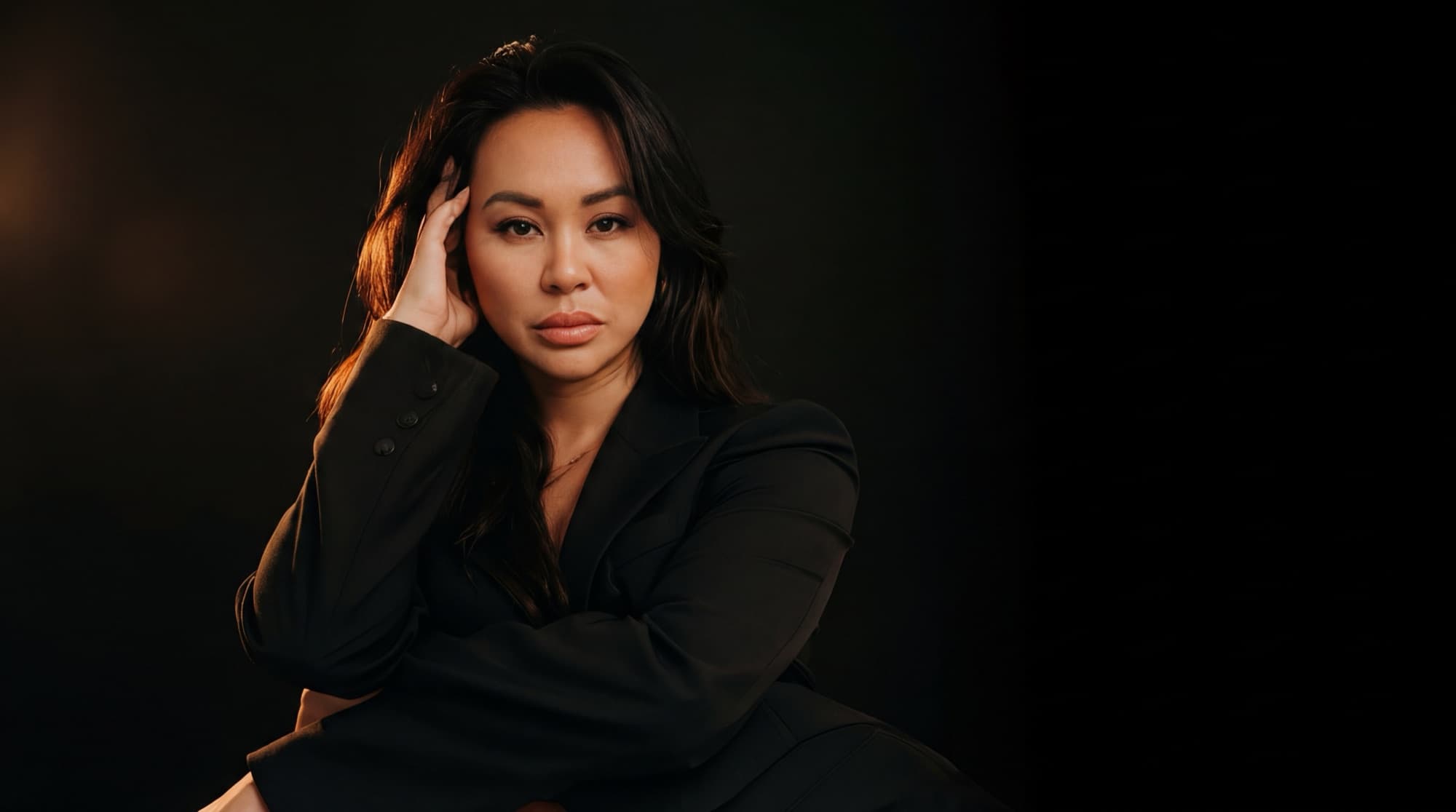
I won the World Microblading Championship. My studio is literally called Microblading LA. And we don't do microblading anymore.
This is why — and what I tell every client who walks in asking for it.
Nano Brows vs. Microblading, in One Paragraph
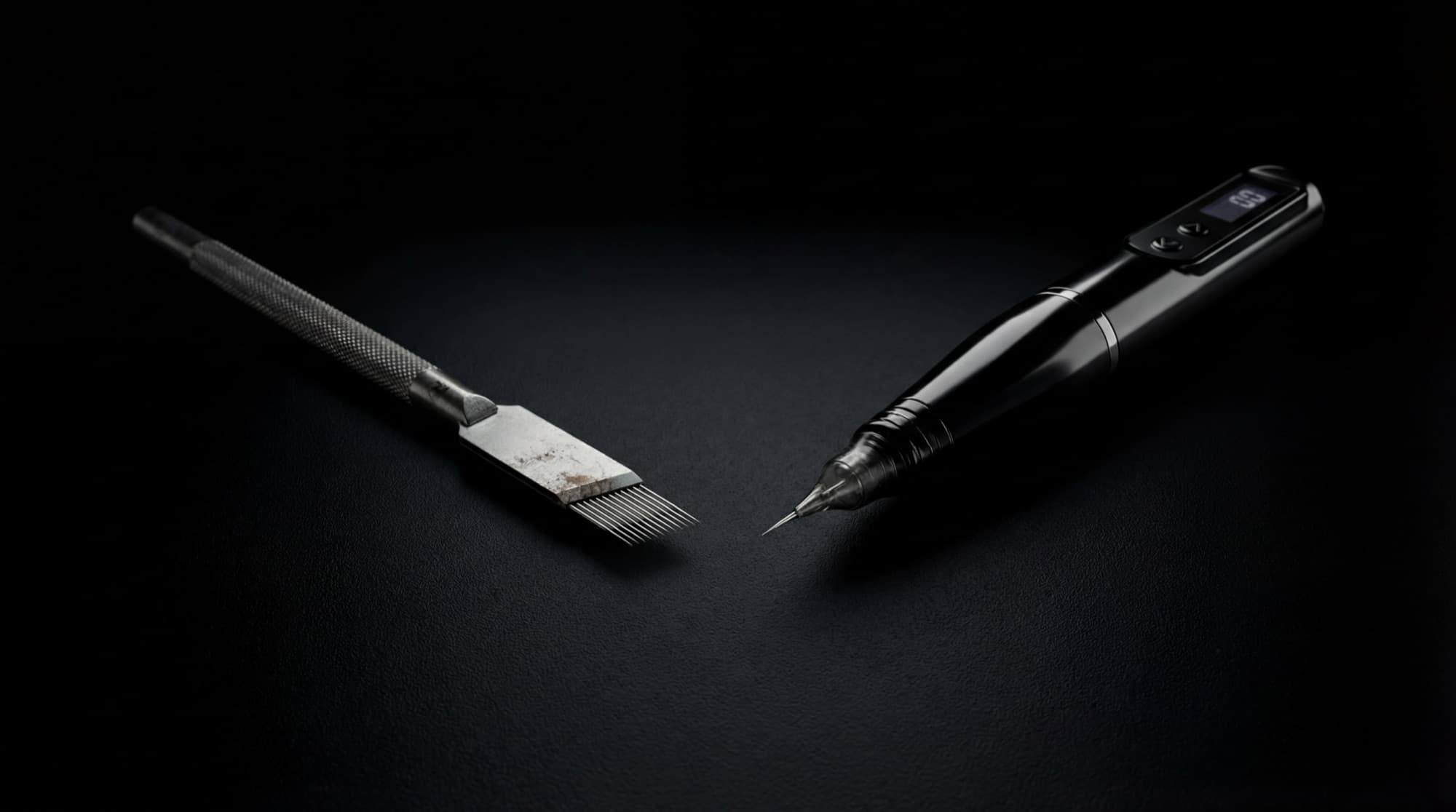
Microblading draws hair strokes into the brow by hand with a blade — usually a row of about eighteen tiny needles — that cuts the pigment into the skin. Nano brows are machine hair strokes: a permanent makeup machine with a single needle places the pigment stroke by stroke, shallower and with less ink. Both are trying to look like real brow hair. The tool is what decides how they look two years later.
| Microblading | Nano Brows | |
|---|---|---|
| Tool | Hand blade, usually about 18 needles in a row | Machine with a single needle |
| What it does to the skin | Cuts | Works more like stitching |
| Depth and ink | Deeper, more ink | Shallower, less ink |
| Look | Can look beautiful when fresh | More delicate and more realistic |
| While healing | Peels more, looks more dramatic | Light flaking around day 7 |
| Over the years | Ink stays trapped and migrates, often with scar tissue | Softens, and eventually fades away if not refreshed |
| Touch-ups | Limited — going over the same area too often risks scar tissue | About once a year, no real limit |
I Chased Perfect Microblading for Years
When microblading arrived, it was a brand-new craft and none of us fully understood it. There were conferences and forums where professionals got together just to figure it out. And it was exciting — fresh microblading looks unbelievable. The art of it is so beautiful.
Then it heals. Something changes in those four weeks, and we kept seeing inconsistent healing — results that weren't what they should have been. So we chased it, for a long time. We just didn't understand it back then.
It wasn't one client that made me switch. It was seeing case after case not turn out as good as it should. Microblading was good for a lot of people, but for some people it wasn't good enough — and there was nothing better to offer them, because we were so in love with hair strokes.
Two things had to happen at the same time. What microblading can and can't do had to be proven very clearly — and it was. And machine hair strokes had to come far enough to prove themselves. I had been doing nano for about a year, and I was seeing those clients come back after a year looking soft and natural. When both sides were clear, we stopped microblading completely.
The hardest part was letting go
There was a lot of resistance — from everyone, including me. I had built my name on microblading. Our name is Microblading LA. My team had to relearn their craft, and anything new takes time to get really good at. Nano is the more advanced technique, even though it's simpler and more straightforward than microblading once you know it. When you're already good at something, switching completely to something else is hard. It was still the right move.
Blade vs. Machine: What Actually Happens to Your Skin
This is what I tell a client who comes in asking for microblading. Nano is a single-needle technique. It's much more delicate and less invasive than microblading. It sits more shallow in the skin, it uses less pigment, and because it's so detailed, it looks more realistic. A microblading blade is usually eighteen needles in a row.
The blade acts more like cutting. The needle acts more like stitching.
Where You See the Difference: One Year, Two Years
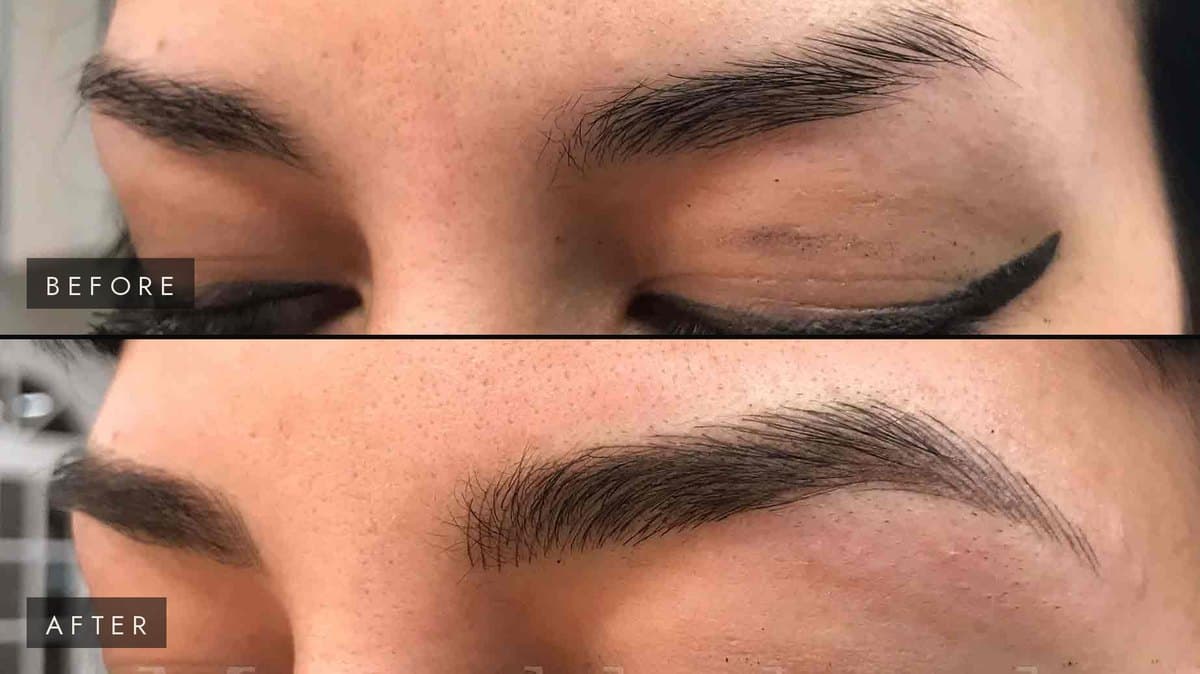
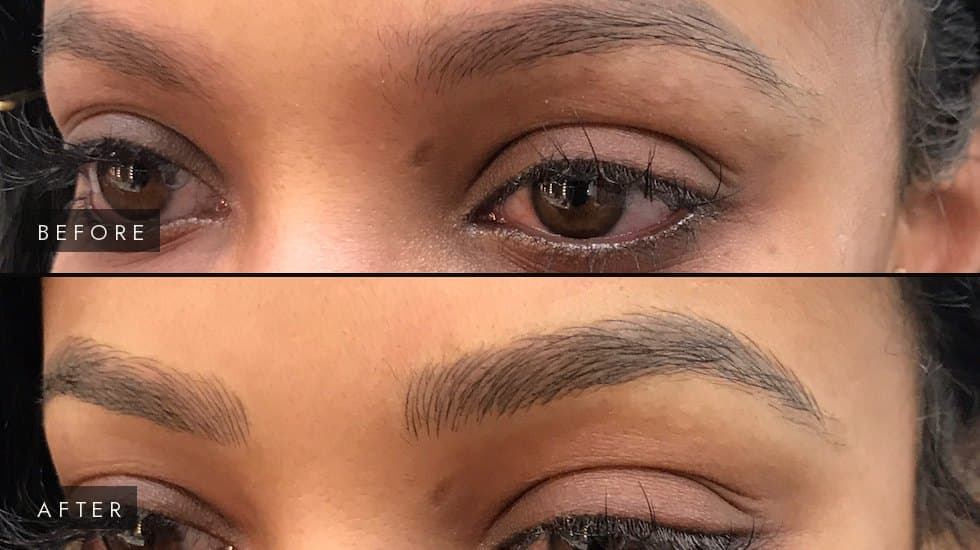
At one and two years, there's a lot less ink in nano brows. Everything looks much softer, and if you never touch them up, at some point they fade away completely.
With microblading, the ink is trapped in the skin, and often there's scar tissue too. Ink behaves a certain way under the skin — when there's a lot of it, deep, for a long time, it migrates.
Oily skin
On oily skin, both techniques will migrate some. Oil fades ink out, so the brows get lighter. With nano, there's less ink and it's more shallow, so it fades instead of spreading. Microblading goes too deep to fade.
With microblading, it's too deep, so it doesn't fade away. It just migrates and becomes a puddle of ink in the skin.
I'll be honest about oily skin: nano changed things for maybe eighty percent of the oily-skin clients who were told stroke brows wouldn't work for them. About twenty percent are simply too oily for any hair-stroke technique, machine or blade. You can see healed nano brows results here.
Healing, Day by Day
Here's what our nano brows clients see:
- Right after: the brows look red.
- After 24 hours: a little darker, because a light scab is forming.
- Around day 7: they start flaking lightly.
- Around day 10: the flaking is done and they look a little light. This is normal.
- Day 14: completely healed on the surface.
- Up to day 30: the color slowly comes back in and gets a little darker until it settles.
Microblading scabs more. It peels more and looks more dramatic while it heals, because it's more invasive — so it's the one that worries clients during healing. Itching mostly comes from dryness, which is why aftercare matters for both. With nano, we rarely see poor healing.
Touch-Ups: How Often, and Why It Matters
Most nano brows clients come back about once a year to refresh. With microblading, we were always limited in how often we could touch up, because going over the same cuts too often can cause scar tissue. Nano is much gentler on the skin, so there's really no restriction on how often we can refresh it. Touch-up pricing is on our prices page.
Already Have Microblading?
A lot of our nano brows clients had microblading done somewhere else first. Often they have to do removal before we can start. Nano is so soft and delicate that it needs almost virgin skin underneath — very little old ink, or none.
And for men
The difference is even easier to see on men. Microblading on a man can look very different from his natural brows. Nano looks just natural — like his own hair.
Why So Many Studios Still Offer Microblading
Because switching costs a lot. It takes time, effort and money to retrain artists until they're really good at nano. And nano takes more time per client — an artist can only take about half the clients they used to. Charge the same and you earn less. A lot of studios haven't made that turn.
The red flag: "nano" that isn't nano
A lot of people don't really understand what nano is, and a lot of studios say they do nano brows when they don't. "Nano" just means smaller than micro — finer and more precise. In practice there are only two things: machine hair strokes or a blade. Some artists use a so-called nano blade and call it nano. It's still a blade. It's still cutting the skin.
So ask one question before you book: is it done with a machine? Real nano brows have to be done with a machine. The needle can vary; the machine can't.
Where Brows Are Going
Softer, and even more natural. After years of "natural" microblading that turned into big blobs of ink, people want something very soft and light — to wake up with natural brows already there, with no effort. And on a night out, you pencil them in.
The One Thing I Want You to Know
There isn't really another option. There should never be a reason to do microblading over machine hair strokes — over nano brows. In every case, nano is going to win. That's the future of eyebrows.
If you're deciding between the two, that's my answer after fifteen years and thousands of healed results on both. Read more about my story, see how microblading compares at our studio, or look at real healed nano brows.
Questions I Get Every Day
Are nano brows the same as microblading?
No. Both create hair strokes, but microblading cuts pigment into the skin by hand with a blade (usually about 18 needles in a row), while nano brows are machine hair strokes made with a single needle. Nano sits more shallow, uses less ink and looks more realistic.
Is there any reason to choose microblading over nano brows?
Not in my experience. After fifteen years of healed results on both, nano wins in every case. That's why Microblading LA stopped offering microblading.
How long do nano brows take to heal?
They flake lightly around day 7, are done flaking by about day 10, and are completely healed on the surface by day 14. The color keeps settling and darkening slightly up to day 30.
How often do nano brows need a touch-up?
Most clients come back about once a year. Because nano is gentle on the skin, there's no real limit on how often it can be refreshed — unlike microblading, where repeated touch-ups risk scar tissue.
Do nano brows work on oily skin?
For about eight in ten oily-skin clients, yes. Nano is shallower and uses less ink, so on oily skin it fades lighter instead of blurring. About one in five clients are too oily for any hair-stroke technique.
Can I get nano brows over old microblading?
Often you need removal first. Nano is soft and delicate, so the skin underneath should have very little old ink — close to virgin skin — for the strokes to heal the way they should.
How can I tell if a studio really does nano brows?
Ask whether it is done with a machine. Real nano brows are always machine hair strokes. A "nano blade" is still a blade, and it still cuts the skin.
Ready to See the Difference?
Book your session and let us assess your brows, answer your questions, and show you what Nano Brows can do for you.
BOOK YOUR SESSION →Pay over time with Cherry · Trusted by 15,000+ clients